Tell us about the job
Takes about a minute. No obligation.
A contractor quoting a boiler installation in Monroe County has to think about what that system will actually be asked to do here, and the weather record gives some of that picture. 88 severe weather events were recorded in Monroe County, Indiana between 2015 and 2024. At roughly that rate, severe weather is real but not the dominant pressure on a system. What a contractor sizes and specifies for has more to do with the age of the home, its insulation, and the quality of the existing distribution system than with storm load. A boiler undersized or poorly piped at installation will underperform regardless of the season.
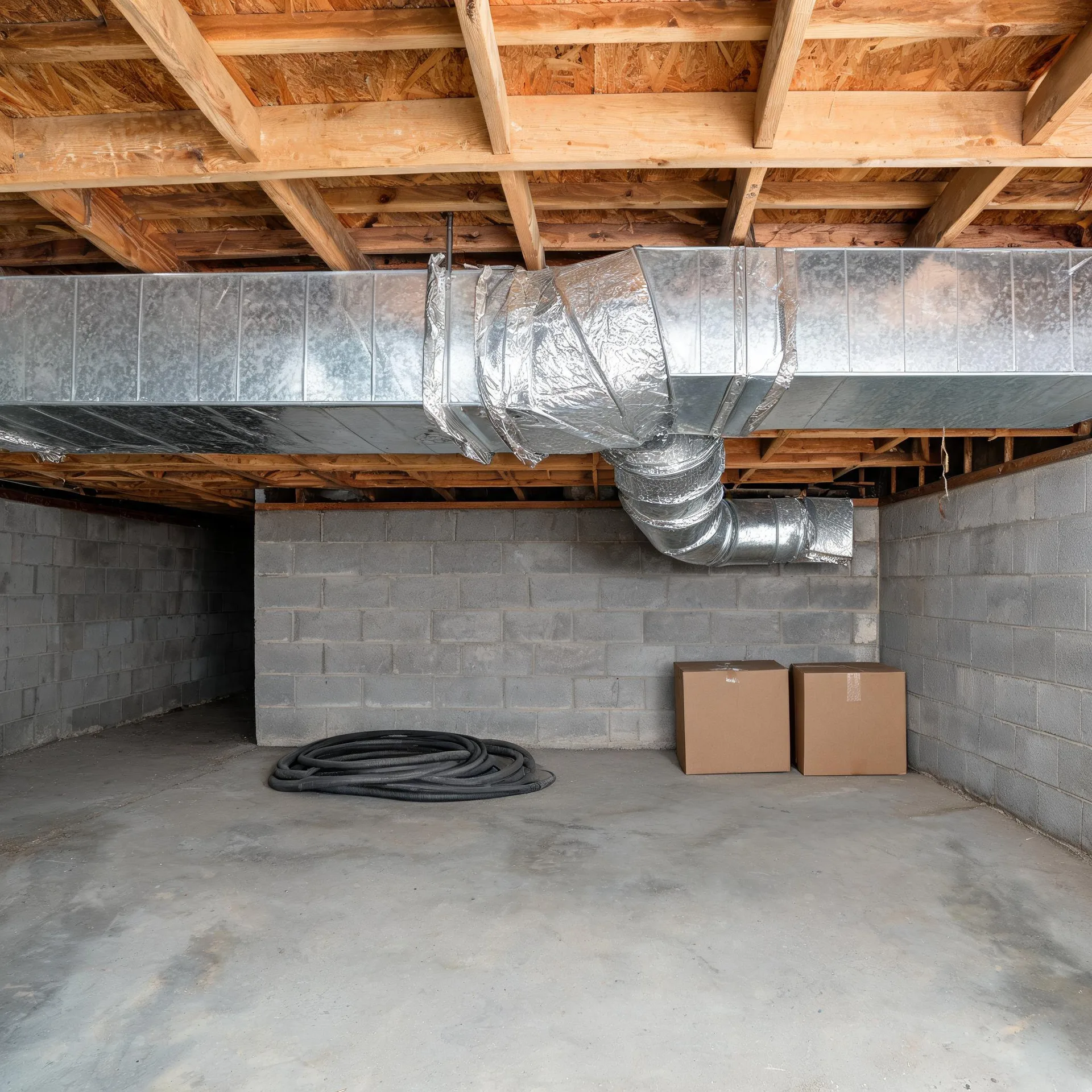
Ductwork and piping in a house this old were laid for whatever the original system needed, and a boiler going in today has to work with what is already behind the walls or the job grows. Half the homes in Monroe County, Indiana were built in 1986 or earlier (2020-2024 ACS 5-year). That gap between what was built and what a contractor is now connecting to it means the existing distribution runs get evaluated before anything is quoted or ordered. What a licensed contractor finds there determines whether the installation is straightforward or whether the runs need rerouting to carry the new system's output.
What a Boiler Installation Puts in Your Home
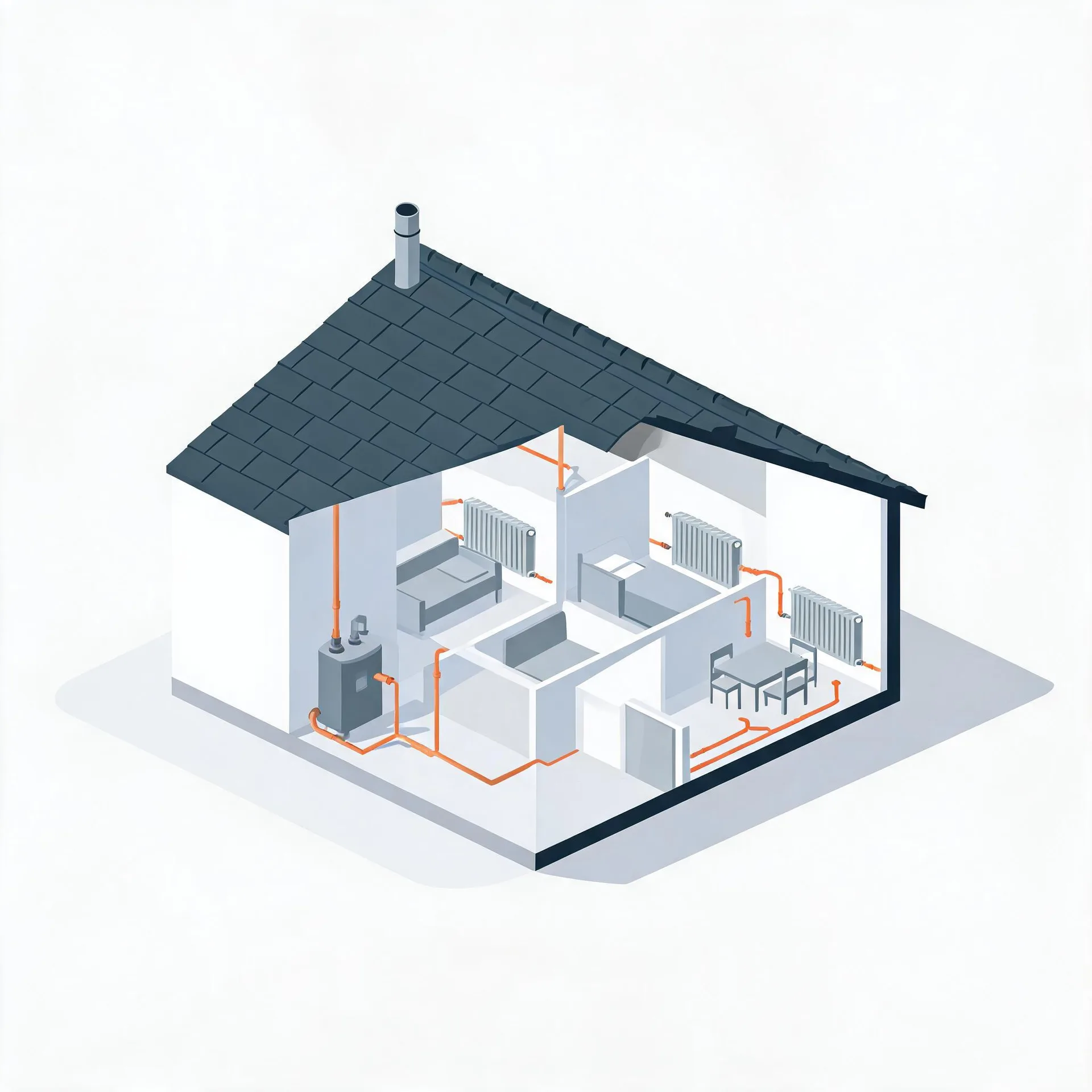
The boiler itself sits in a mechanical room, basement, or utility closet and is the unit a contractor replaces when a system is new. Alongside it goes the expansion tank, which absorbs pressure changes as water heats, and the circulator pump, which pushes heated water out through the pipes.
The thermostat mounts on a wall inside the living space and tells the boiler when to fire. Radiators or radiant floor tubing receive the hot water and give off heat room by room, while shutoff valves and supply and return lines tie every piece of the loop together.
The drawing shows a representative layout, and a licensed contractor determines which components apply to this particular house.
Find a contractor in Monroe CountyMonroe County, Indiana, by the numbers
88 severe weather events were recorded in Monroe County, Indiana between 2015 and 2024.
NOAA National Centers for Environmental Information, Storm Events Database, bulk CSV export, events 2015-01-01 through 2024-12-31.Half the homes in Monroe County, Indiana were built in 1986 or earlier (2020-2024 ACS 5-year).
U.S. Census Bureau, 2020-2024 American Community Survey 5-Year EstimatesMonroe County, Indiana holds 65,657 housing units (2020-2024 ACS 5-year).
U.S. Census Bureau, 2020-2024 American Community Survey 5-Year EstimatesOwners occupy 54.0% of the occupied homes in Monroe County, Indiana (2020-2024 ACS 5-year).
U.S. Census Bureau, 2020-2024 American Community Survey 5-Year EstimatesSevere Weather Events in Monroe County
Boilers work hardest when outdoor conditions push demand to its limits, and Monroe County's weather record shapes how hard that is. Sizing and installing equipment for this area means accounting for what the local climate actually asks of it.
88 severe weather events, 2015–2024. Source: NOAA National Centers for Environmental Information, Storm Events Database.