Tell us about the job
Takes about a minute. No obligation.

A boiler that stops working in Jefferson County most likely has an age or maintenance story behind it. 75 severe weather events were recorded in Jefferson County, Indiana between 2015 and 2024. At that rate, severe weather is an event here, not a standing condition, and it does not explain a cracked heat exchanger or a failed circulator pump the way deferred servicing does. A contractor worth hiring will check sediment buildup, burner condition, and expansion tank pressure before pointing at anything outside the house.
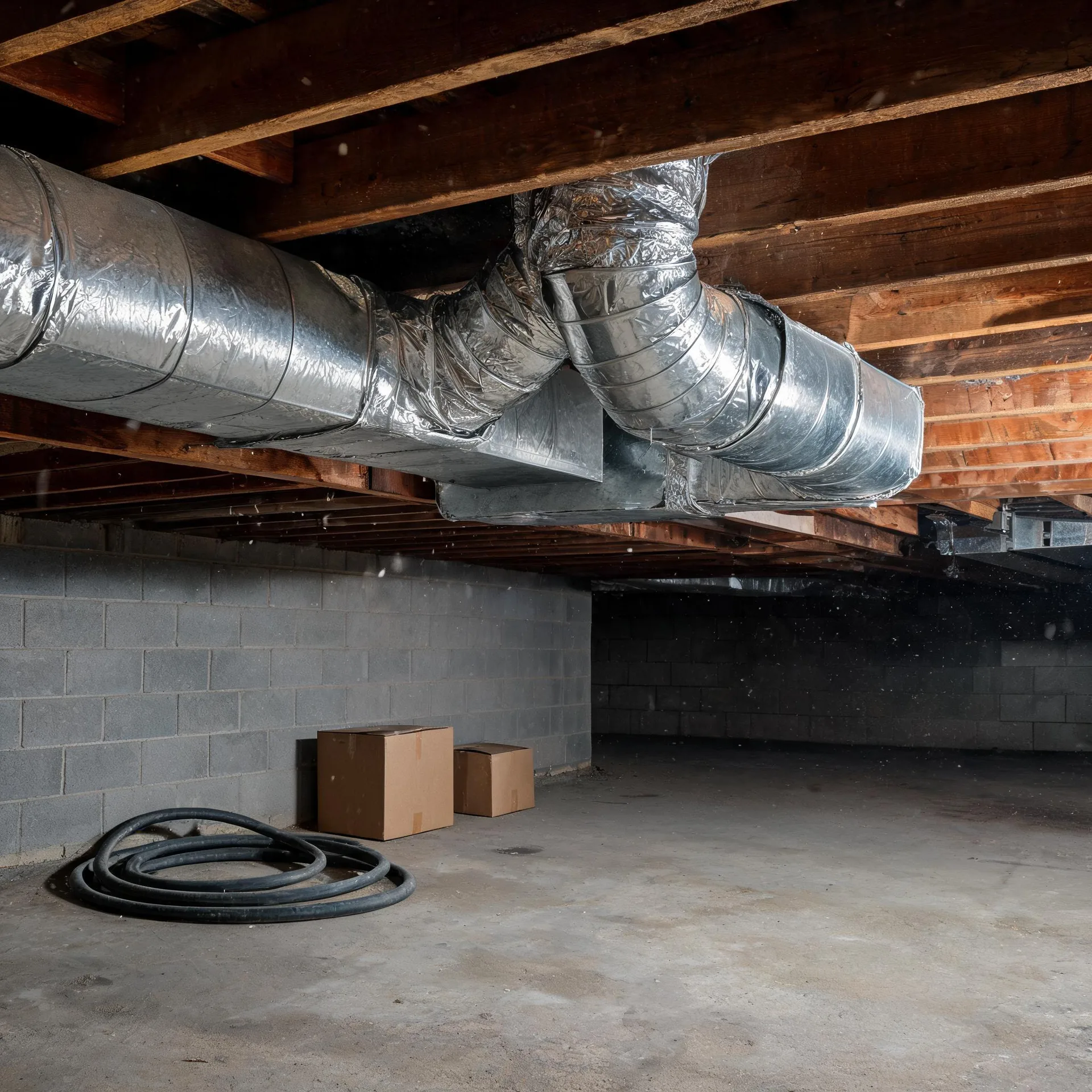
Piping that has run hot for generations develops its own problems: pinhole leaks at fittings, zone valves that stick, expansion tanks that have lost their charge and load the heat exchanger as a result. Half the homes in Jefferson County, Indiana were built in 1973 or earlier (2020-2024 ACS 5-year). A boiler opened for what looks like a burner or controls repair can turn out to need pipe work upstream of the unit before the boiler fix holds. That is where the quote changes, and a contractor who does not check the distribution side before pricing the job will miss it.
The Parts of a Boiler a Contractor Checks First
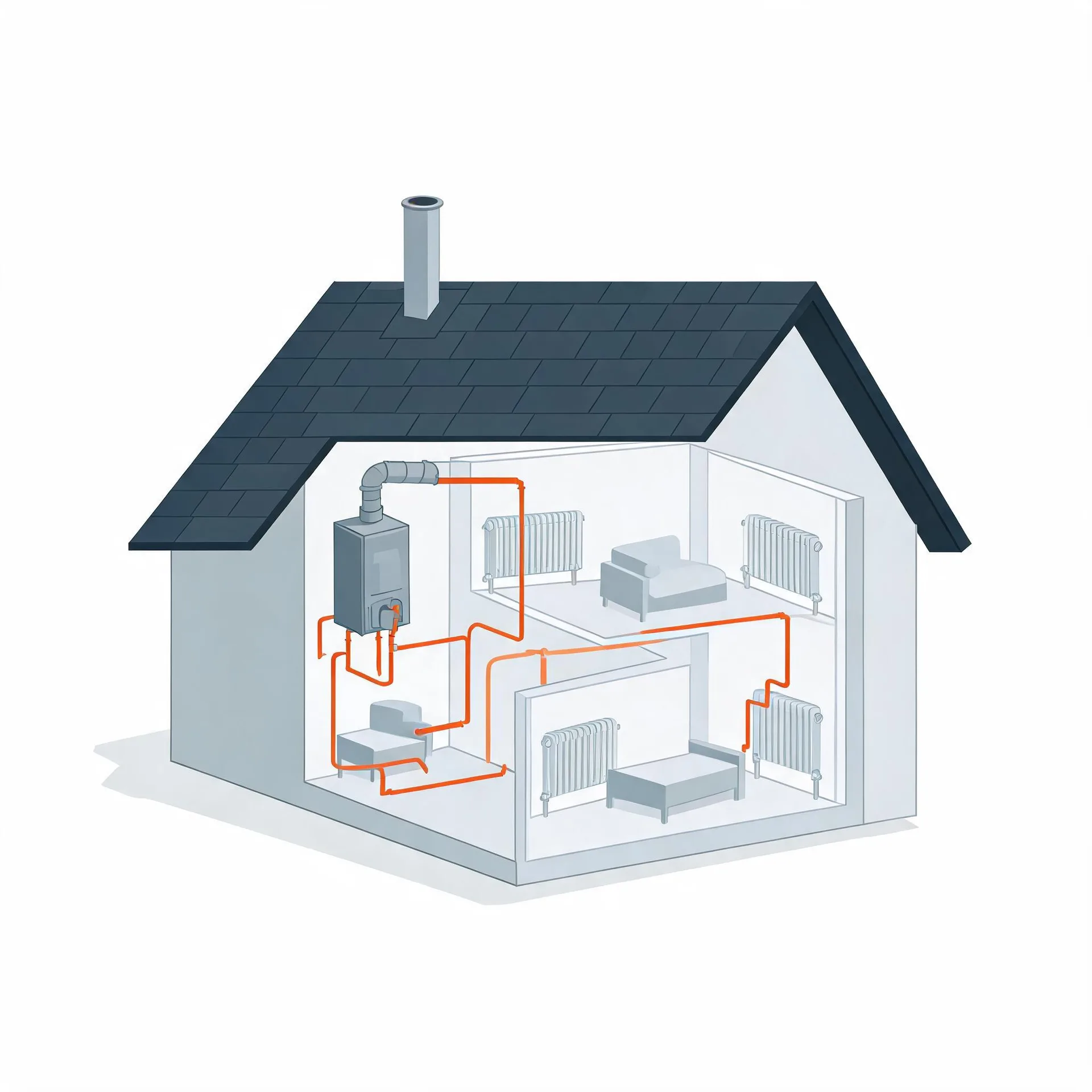
The boiler itself sits in the basement or a mechanical room and is the piece a contractor goes to first. It heats water and pushes it out through the system. When a boiler is short-cycling, leaking, or failing to reach temperature, the burner assembly, heat exchanger, and pressure relief valve are where the diagnosis begins.
From the boiler, pipes carry hot water to radiators or baseboard units in each room, and a circulator pump keeps that water moving. The expansion tank, usually mounted near the boiler, absorbs pressure swings as the water heats and cools. A contractor checks the pump for seized bearings and the expansion tank for waterlogging when heat is uneven or pressure readings run high.
The drawing shows a typical boiler layout, and a licensed contractor determines which components and conditions apply to your specific house.
Find a contractor in Jefferson CountyJefferson County, Indiana, by the numbers
75 severe weather events were recorded in Jefferson County, Indiana between 2015 and 2024.
NOAA National Centers for Environmental Information, Storm Events Database, bulk CSV export, events 2015-01-01 through 2024-12-31.Half the homes in Jefferson County, Indiana were built in 1973 or earlier (2020-2024 ACS 5-year).
U.S. Census Bureau, 2020-2024 American Community Survey 5-Year EstimatesJefferson County, Indiana holds 14,517 housing units (2020-2024 ACS 5-year).
U.S. Census Bureau, 2020-2024 American Community Survey 5-Year EstimatesOwners occupy 71.8% of the occupied homes in Jefferson County, Indiana (2020-2024 ACS 5-year).
U.S. Census Bureau, 2020-2024 American Community Survey 5-Year EstimatesSevere Weather Events in Jefferson County
Boilers work hardest when outdoor conditions are at their worst, and the stress of repeated weather events accumulates inside the system over time. How hard the equipment has been pushed is a local fact, and it shapes what repair work in Jefferson County actually looks like.
75 severe weather events, 2015–2024. Source: NOAA National Centers for Environmental Information, Storm Events Database.