Tell us about the job
Takes about a minute. No obligation.

A boiler repair in Huntington County starts with what the equipment has already been through. 144 severe weather events were recorded in Huntington County, Indiana between 2015 and 2024. At that rate, severe weather is part of the normal operating life of every system in this county, and a contractor knows it before opening a single panel. Heat exchangers, pressure relief valves, and expansion tanks carry the bulk of that accumulated stress. A contractor here checks those first, because they are where repeated weather-driven load shows up as cracks, fatigue, and failed seals.
Boilers in housing this old have typically been replaced at least once, which means the unit a contractor opens may bear a model number from a line that stopped being manufactured well before today. Half the homes in Huntington County, Indiana were built in 1966 or earlier (2020-2024 ACS 5-year). That gap between the building and what is currently running in it produces a specific repair problem: heat exchangers, zone valves, and circulator assemblies for older boiler generations are not always available through standard distributors, and what a contractor can order determines what a repair actually costs and whether it is worth completing. A parts search changes the scope of the job.
The Parts of a Boiler a Contractor Checks First
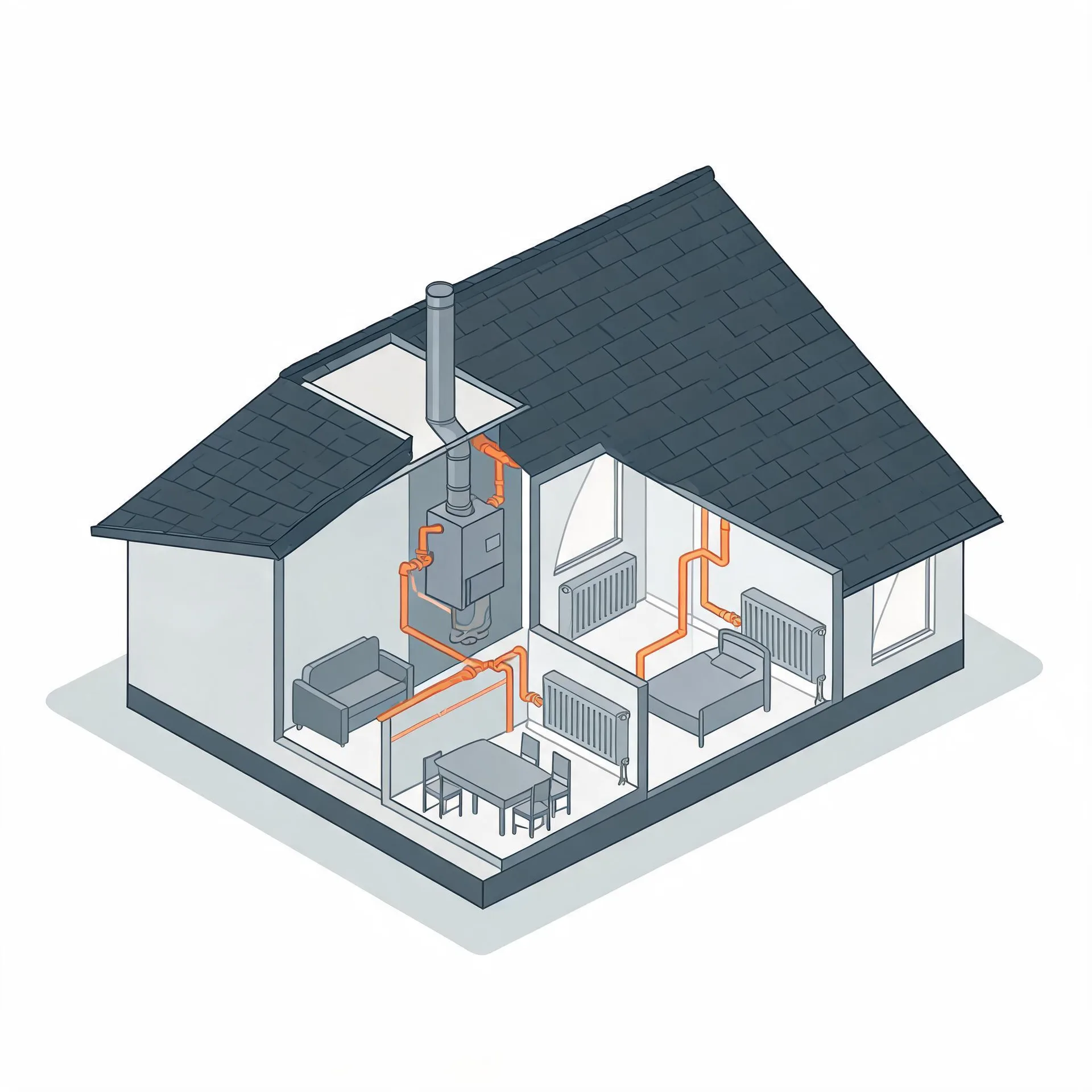
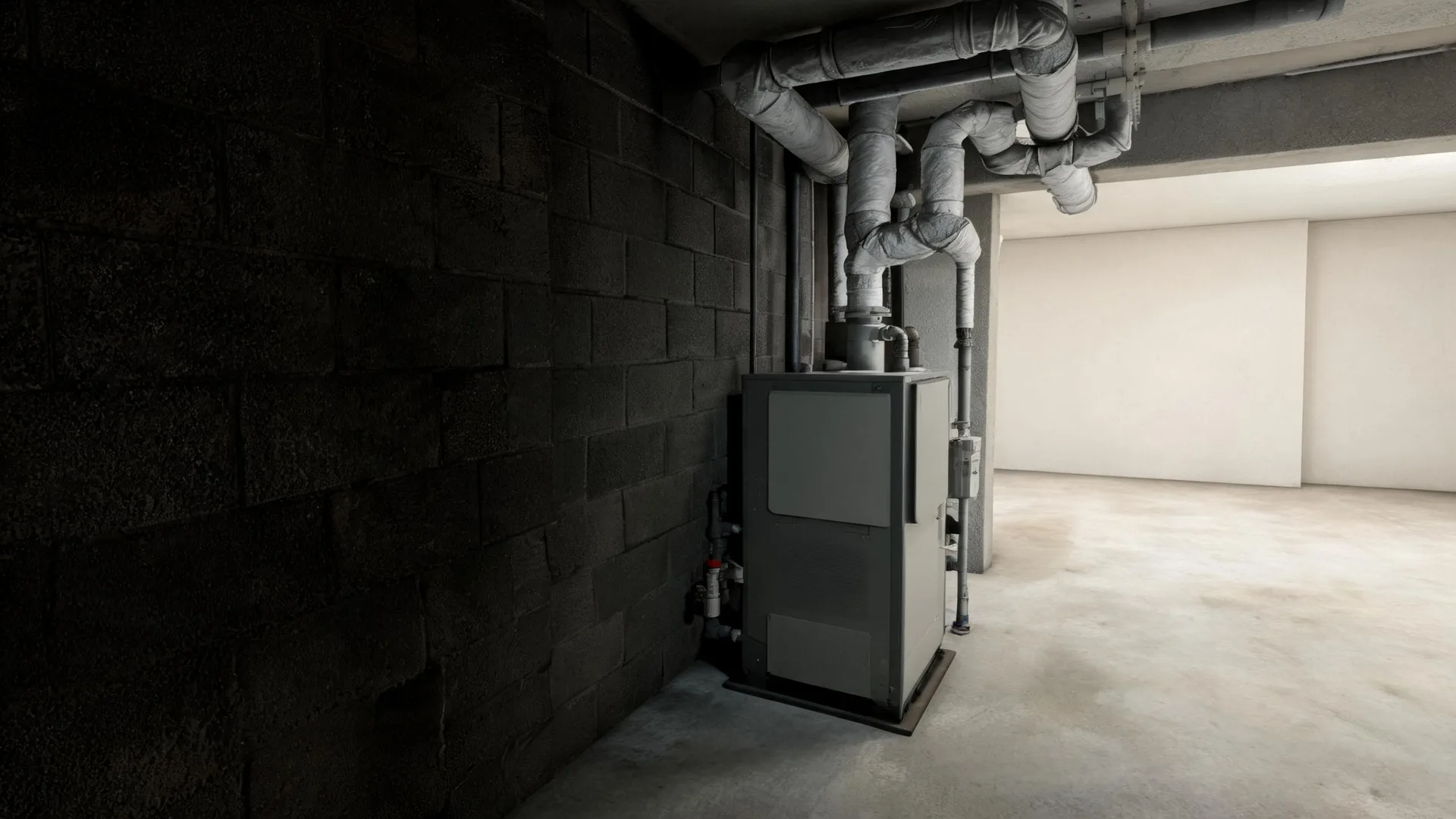
The boiler itself sits in the basement or mechanical room and is where water gets heated before it moves through the house. When that unit is the problem, a contractor will look at the burner assembly and heat exchanger, since faults there show up as uneven heat, strange cycling, or a system that simply stops producing warmth.
Radiators or baseboard units sit in each room and release heat directly into the living space. The circulator pump, which keeps hot water moving through the pipes, and the expansion tank, which manages pressure in the system, both sit near the boiler and are common points a contractor checks when heat delivery is weak or pressure is off.
The drawing shows the general layout of a boiler system, and a licensed contractor determines what applies to the specifics of your house.
Find a contractor in Huntington CountyHuntington County, by the numbers
144 severe weather events were recorded in Huntington County, Indiana between 2015 and 2024.
NOAA National Centers for Environmental Information, Storm Events Database, bulk CSV export, events 2015-01-01 through 2024-12-31.Half the homes in Huntington County, Indiana were built in 1966 or earlier (2020-2024 ACS 5-year).
U.S. Census Bureau, 2020-2024 American Community Survey 5-Year EstimatesHuntington County, Indiana holds 16,340 housing units (2020-2024 ACS 5-year).
U.S. Census Bureau, 2020-2024 American Community Survey 5-Year EstimatesOwners occupy 77.4% of the occupied homes in Huntington County, Indiana (2020-2024 ACS 5-year).
U.S. Census Bureau, 2020-2024 American Community Survey 5-Year EstimatesSevere Weather Events in Huntington County
Huntington County's climate puts real stress on boiler systems, and weather events are a direct driver of repair demand. Tracking what this area sees year over year shows why boiler work here is not a one-size-fits-all job.
144 severe weather events, 2015–2024. Source: NOAA National Centers for Environmental Information, Storm Events Database.