Tell us about the job
Takes about a minute. No obligation.
A boiler repair call in Daviess County usually comes down to the system itself, not what the sky has thrown at it. 49 severe weather events were recorded in Daviess County, Indiana between 2015 and 2024. At that rate, severe weather is an occasional fact of life here, not a steady operating load, so a contractor arriving at a failed heat exchanger or a seized circulator pump is not looking at storm wear. They are looking at the age of the components, how the system was installed, and whether it has been serviced. Those are the variables that decide what the repair costs and what gets replaced.
Boilers in housing this old accumulate problems inside the unit that no exterior inspection catches. Half the homes in Daviess County, Indiana were built in 1975 or earlier (2020-2024 ACS 5-year). That span of service time means heat exchangers carry years of mineral buildup, zone valves wear to the point where the original part numbers are no longer in production, and pressure relief components that look functional fail once a contractor puts them under load. A boiler that fires on a call for heat can still have a cracked exchanger or a failing aquastat. What a contractor finds once the unit is open, and whether the replacement parts for that specific assembly are still manufactured, is what decides the scope and the bill.
The Parts of a Boiler a Contractor Checks First
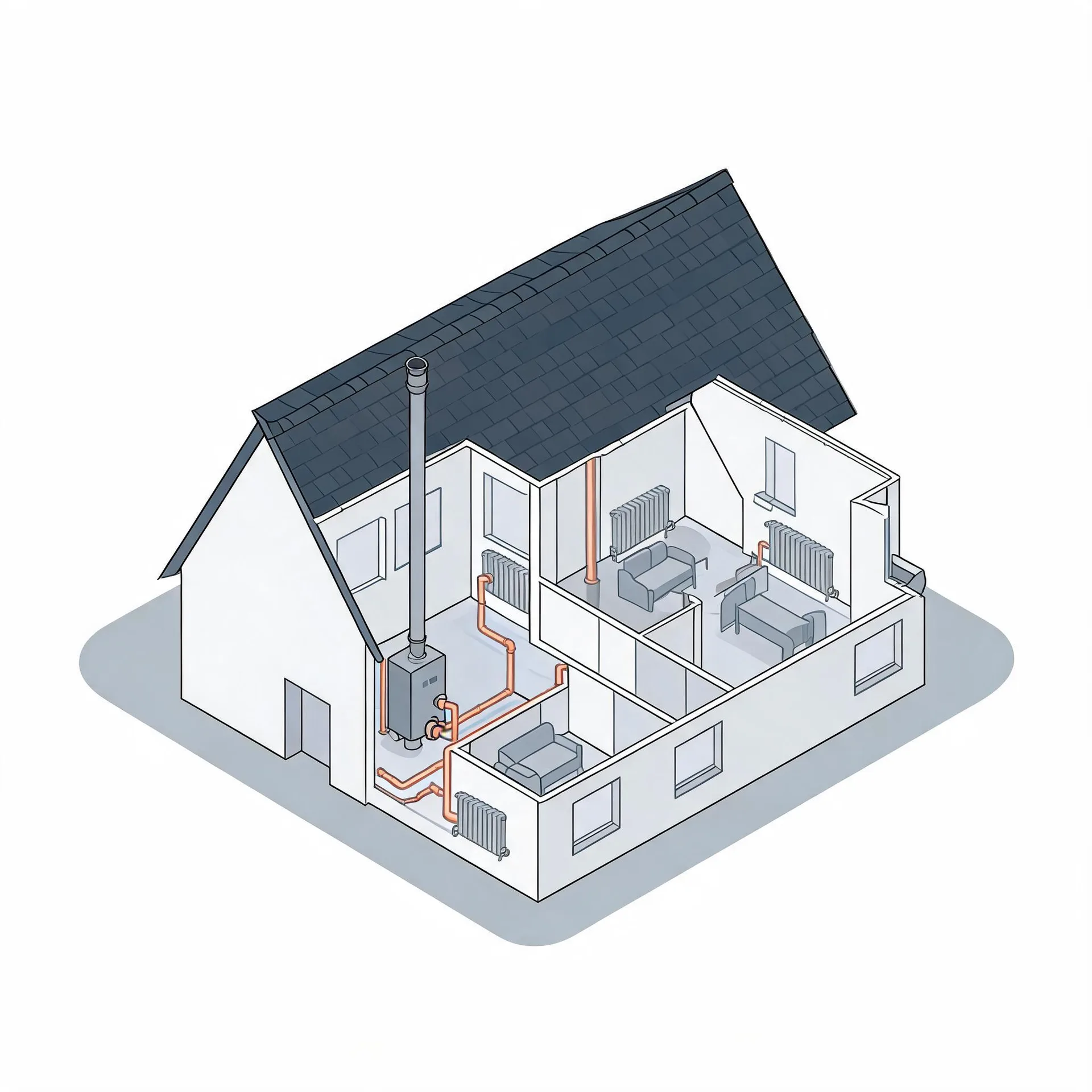
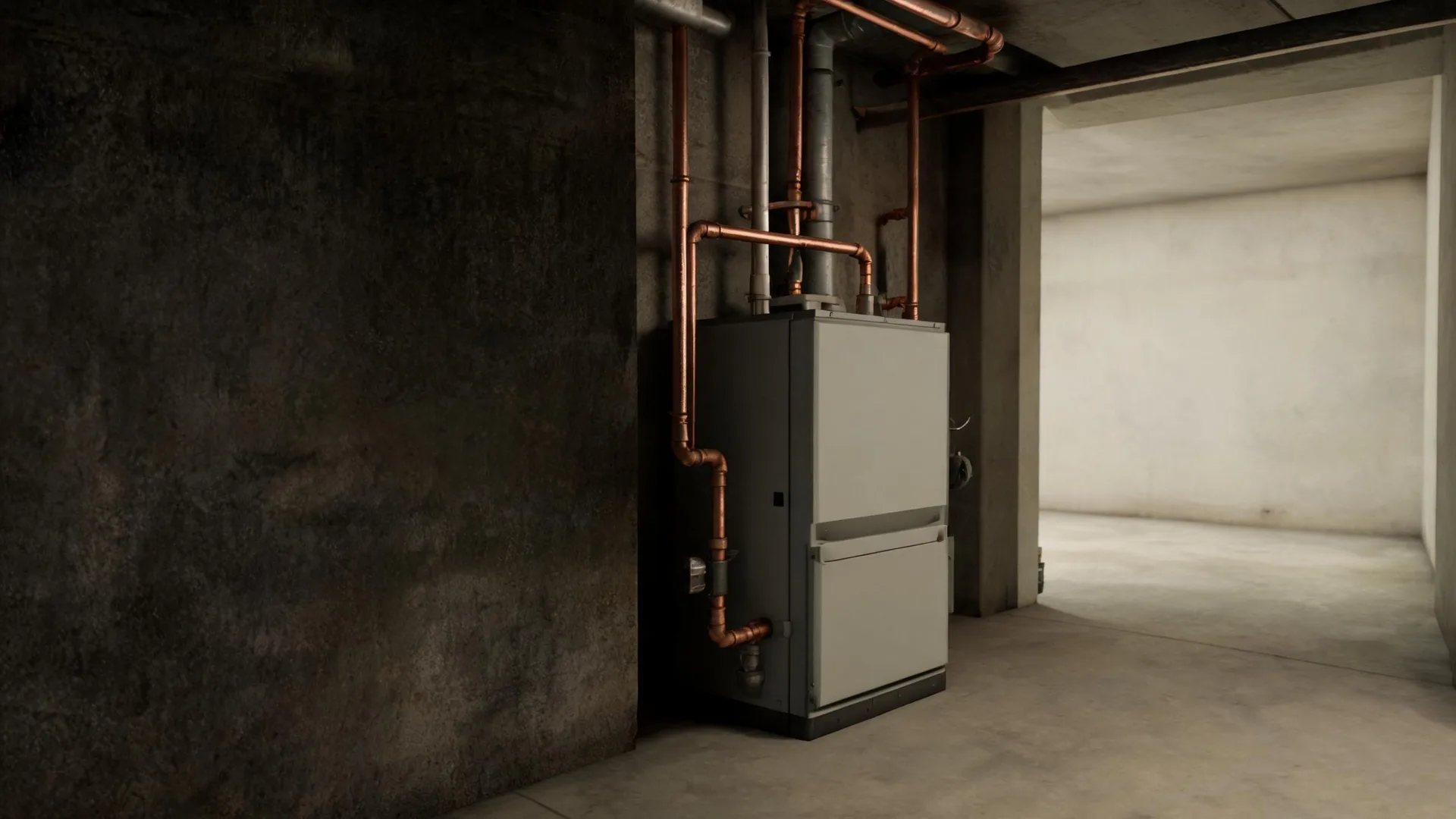
The boiler itself sits in the basement or a mechanical room and is the piece a contractor goes to first. It heats water and pushes it out through the system. When a boiler is running poorly or not at all, the heat exchanger, burner assembly, and pressure relief valve inside that unit are where a contractor begins looking.
From the boiler, supply pipes carry hot water to radiators or baseboard units in each room, and return pipes bring cooled water back. The circulator pump, which drives that flow, and the expansion tank, which keeps pressure stable, both sit close to the boiler and are common points of failure when heat delivery becomes uneven or stops.
The drawing shows a typical layout, and a licensed contractor determines which components apply to your specific system.
Find a contractor in Daviess CountyDaviess County, by the numbers
49 severe weather events were recorded in Daviess County, Indiana between 2015 and 2024.
NOAA National Centers for Environmental Information, Storm Events Database, bulk CSV export, events 2015-01-01 through 2024-12-31.Half the homes in Daviess County, Indiana were built in 1975 or earlier (2020-2024 ACS 5-year).
U.S. Census Bureau, 2020-2024 American Community Survey 5-Year EstimatesDaviess County, Indiana holds 12,887 housing units (2020-2024 ACS 5-year).
U.S. Census Bureau, 2020-2024 American Community Survey 5-Year EstimatesOwners occupy 72.4% of the occupied homes in Daviess County, Indiana (2020-2024 ACS 5-year).
U.S. Census Bureau, 2020-2024 American Community Survey 5-Year EstimatesSevere Weather Events in Daviess County
Boilers work hardest when conditions outside are most demanding, and that load accumulates over time. How often the weather turns harsh in this area shapes how hard local heating equipment is pushed and how often repair needs follow.
49 severe weather events, 2015–2024. Source: NOAA National Centers for Environmental Information, Storm Events Database.