Tell us about the job
Takes about a minute. No obligation.

A boiler installation in Fayette County starts with questions about the house: its age, its insulation, how it has been heated before. 43 severe weather events were recorded in Fayette County, Indiana between 2015 and 2024. At that rate, severe weather is an occasional fact of life here rather than a grinding constant, which means a contractor's sizing decisions turn on the building's heat loss and the fuel source, not on preparing the equipment to survive a relentless outdoor environment. A system that failed here almost certainly failed because of age or a poor original install.
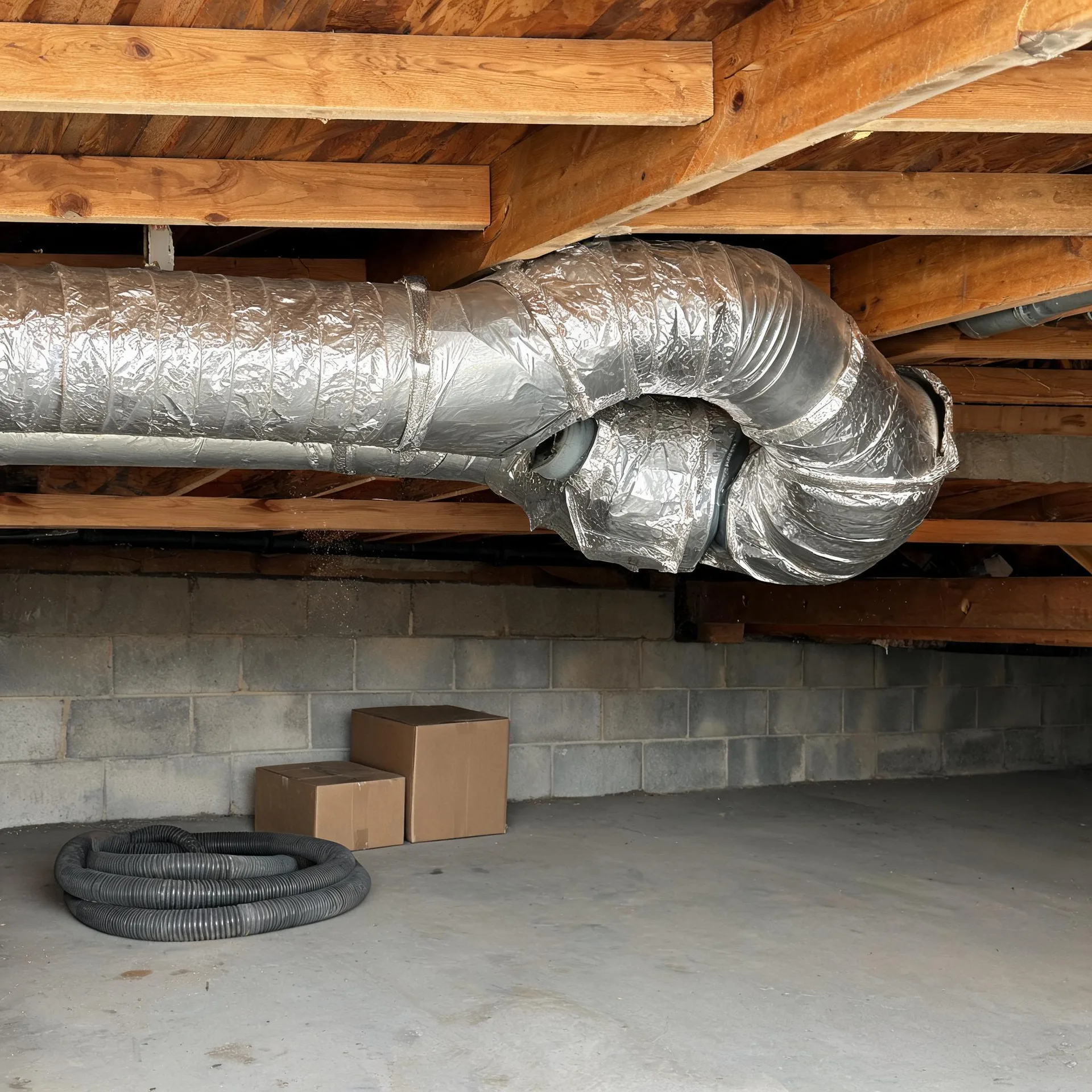
Existing ductwork in a Fayette County house carries the weight of decisions made for equipment long gone. Half the homes in Fayette County, Indiana were built in 1962 or earlier (2020-2024 ACS 5-year). A contractor installing a boiler has to establish what those ducts actually are now: what was added, what was rerouted, what was sealed off. The electrical is its own question. Neither answers itself from the outside of a wall, and what the contractor opens up determines whether the installation is straightforward or whether the house needs work before the boiler does.
What a Boiler Installation Puts in Your Home
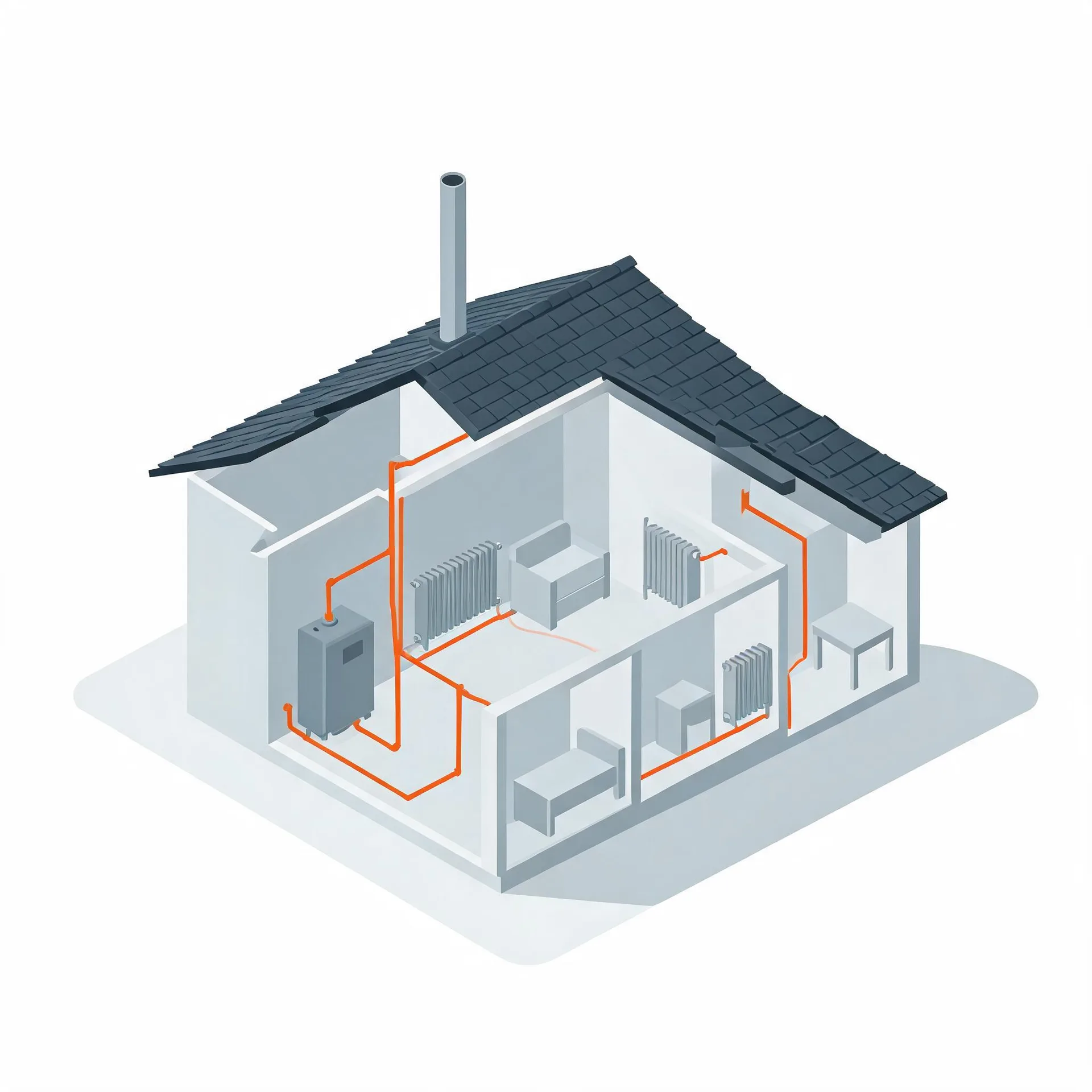
The boiler itself sits in a mechanical room, basement, or utility closet and is the heart of the system. A contractor mounts it against a wall or sets it on the floor depending on the unit type. Alongside it goes the expansion tank, which absorbs pressure changes in the water as it heats.
From the boiler, supply and return pipes run through the house to the heat emitters, whether those are baseboard radiators, panel radiators, or radiant floor loops set into the subfloor. A circulator pump, mounted directly on the piping near the boiler, pushes the heated water through those runs. A pressure relief valve and the system controls are fitted at or near the boiler as well.
The drawing shows a typical layout, and a licensed contractor determines exactly what applies to your house.
Find a contractor in Fayette CountyFayette County, Indiana, by the numbers
43 severe weather events were recorded in Fayette County, Indiana between 2015 and 2024.
NOAA National Centers for Environmental Information, Storm Events Database, bulk CSV export, events 2015-01-01 through 2024-12-31.Half the homes in Fayette County, Indiana were built in 1962 or earlier (2020-2024 ACS 5-year).
U.S. Census Bureau, 2020-2024 American Community Survey 5-Year EstimatesFayette County, Indiana holds 10,905 housing units (2020-2024 ACS 5-year).
U.S. Census Bureau, 2020-2024 American Community Survey 5-Year EstimatesOwners occupy 72.1% of the occupied homes in Fayette County, Indiana (2020-2024 ACS 5-year).
U.S. Census Bureau, 2020-2024 American Community Survey 5-Year EstimatesSevere Weather Events in Fayette County
Weather puts direct stress on heating equipment, and Fayette County's climate is the load a boiler here has to carry year after year. That workload shapes what kind of installation makes sense and how hard the system will have to work to keep up.
43 severe weather events, 2015–2024. Source: NOAA National Centers for Environmental Information, Storm Events Database.