Tell us about the job
Takes about a minute. No obligation.
A boiler going into a Henry County home carries a straightforward brief: heat the house through winter without being pushed beyond its rated capacity. 50 severe weather events were recorded in Henry County, Indiana between 2015 and 2024. That puts the county toward the quieter end of the national picture, which means a contractor sizing a new boiler is solving for the building's heat load and the quality of the pipe work, not compensating for an environment that grinds equipment down year after year. Undersizing, poor venting, and sloppy zone balancing are what shorten a boiler's service life here.
Older pipe runs and distribution layouts are what a boiler contractor has to assess before anything else can be priced or ordered. Half the homes in Henry County, Indiana were built in 1961 or earlier (2020-2024 ACS 5-year). Heating systems in a house of that vintage were built around equipment that no longer exists, and the pipe sizing, radiator placement, and any existing zone layout reflect that original design. A new boiler has to work within what is already there or the contractor has to change what is already there, and that decision drives the scope of the job more than the unit itself does.
What a New Boiler Installation Covers

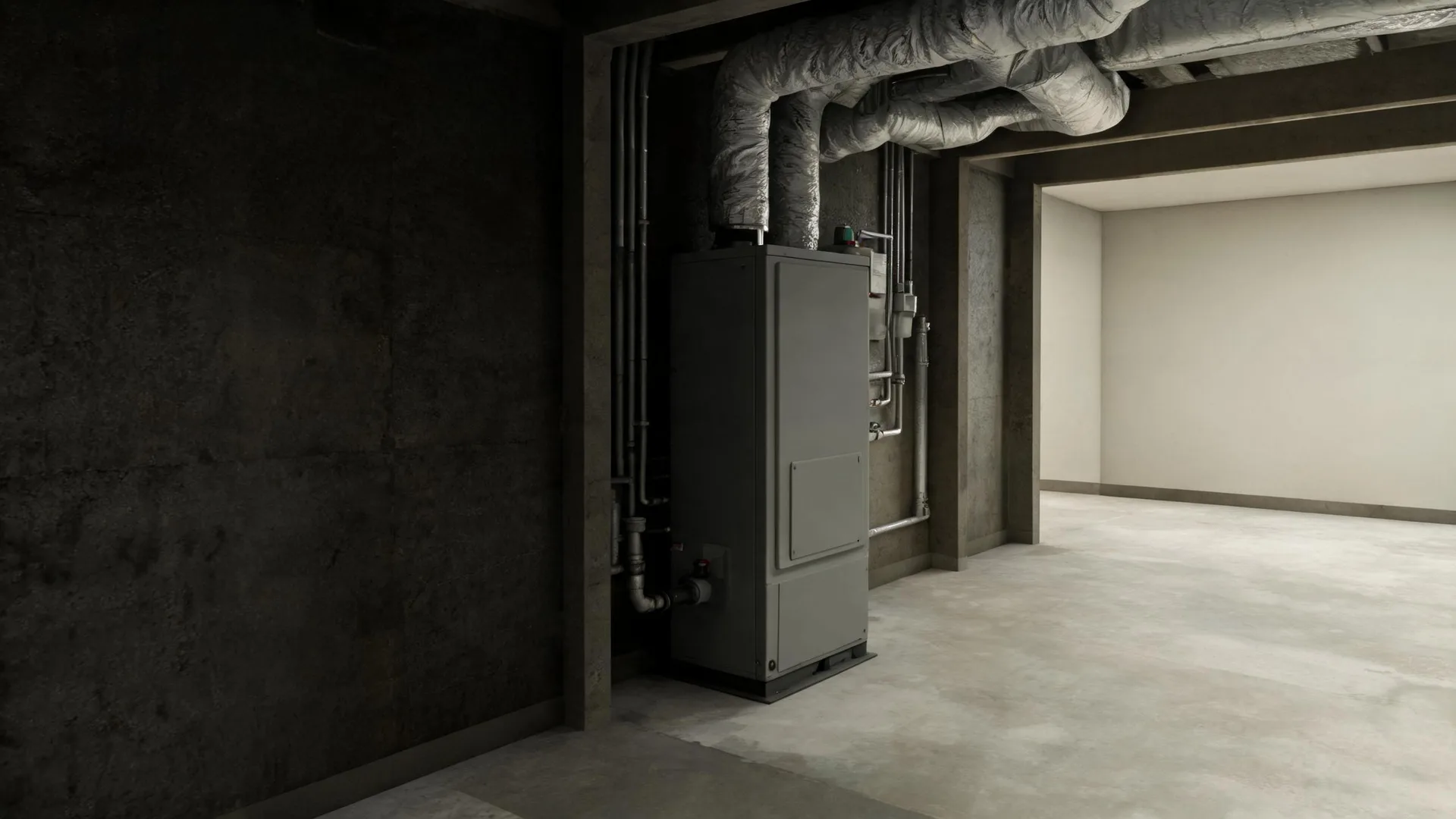
The boiler itself sits in the basement or a utility room and is the heart of the system. A contractor installs the unit there, connecting it to a fuel supply and to the water lines that carry heat through the house. The expansion tank mounts nearby, holding excess water pressure as the system heats up.
Radiators or baseboard convectors go in each room a homeowner wants served, fastened to walls or set along the floor. A contractor also installs or replaces the circulator pump, which pushes hot water through the pipes, and fits the thermostat or zone controls that tell the system when to run.
The drawing shows a typical layout, and a licensed contractor determines which components apply to your specific house.
Find a contractor in Henry CountyHenry County, Indiana, by the numbers
50 severe weather events were recorded in Henry County, Indiana between 2015 and 2024.
NOAA National Centers for Environmental Information, Storm Events Database, bulk CSV export, events 2015-01-01 through 2024-12-31.Half the homes in Henry County, Indiana were built in 1961 or earlier (2020-2024 ACS 5-year).
U.S. Census Bureau, 2020-2024 American Community Survey 5-Year EstimatesHenry County, Indiana holds 20,996 housing units (2020-2024 ACS 5-year).
U.S. Census Bureau, 2020-2024 American Community Survey 5-Year EstimatesOwners occupy 76.2% of the occupied homes in Henry County, Indiana (2020-2024 ACS 5-year).
U.S. Census Bureau, 2020-2024 American Community Survey 5-Year EstimatesSevere Weather Events in Henry County
Boiler systems work hardest when outside conditions push hardest against them. How often Henry County sees severe weather is a real factor in how hard that equipment works and how long it holds up.
50 severe weather events, 2015–2024. Source: NOAA National Centers for Environmental Information, Storm Events Database.