Tell us about the job
Takes about a minute. No obligation.
A contractor quoting a boiler installation in Wayne County has to settle on sizing before anything else, and the local weather record is one of the inputs that shapes that answer. 94 severe weather events were recorded in Wayne County, Indiana between 2015 and 2024. At roughly the national midpoint, that rate puts Wayne County in weather that tests equipment regularly but does not define every season as a recovery from the last storm. What it means for installation is that a boiler spec built for this address needs to handle real heating demand under periodic stress, and a contractor who ignores the record underbuilds the system just as surely as one who prices for conditions that do not exist here.
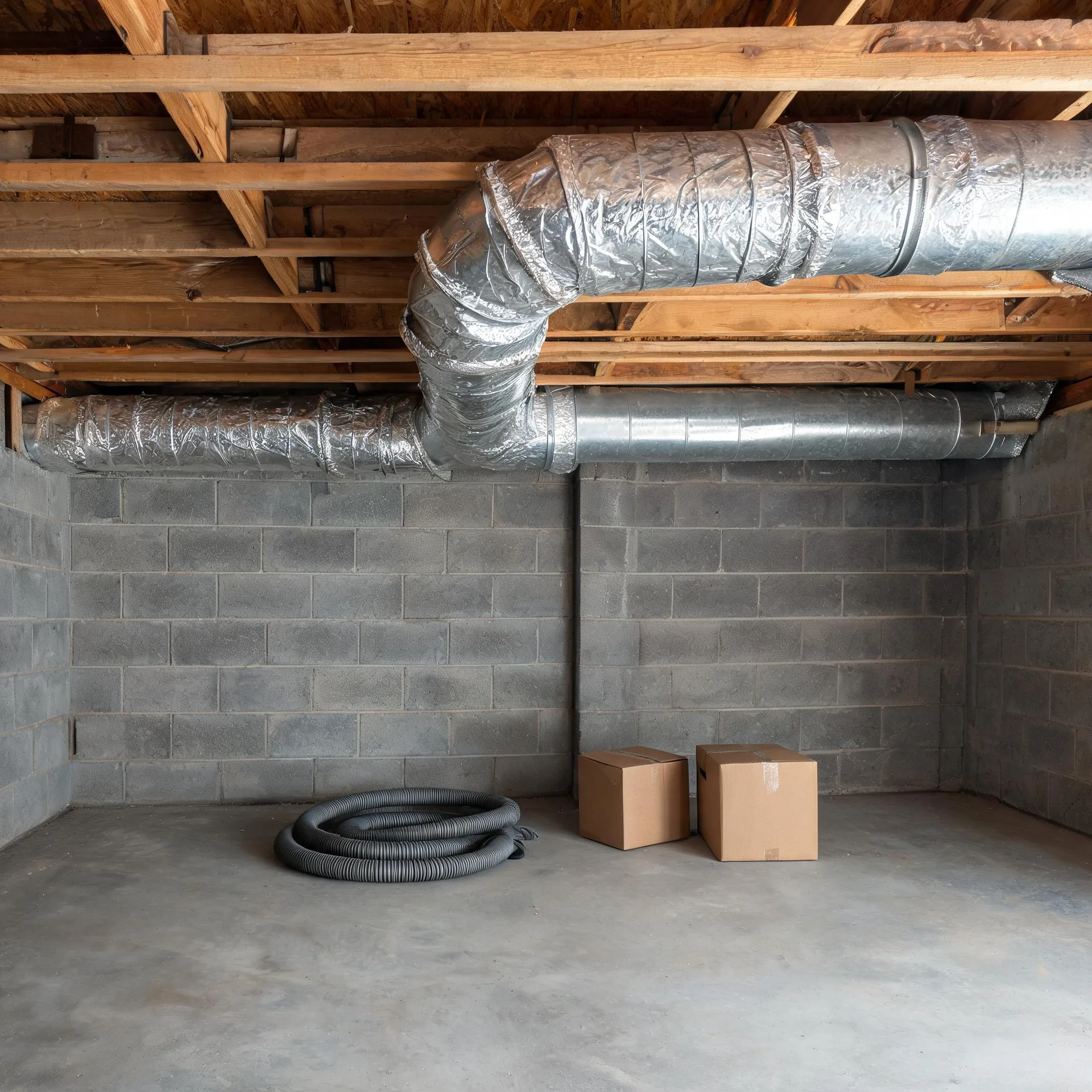
Ductwork laid down for one generation of heating equipment does not automatically suit the next. Half the homes in Wayne County, Indiana were built in 1960 or earlier (2020-2024 ACS 5-year). A contractor installing a boiler in housing from that era has to assess what is already running through the walls and floors before the equipment choice settles anything, because the original distribution layout was designed around a system that may have worked very differently from what is going in now. If the existing runs cannot carry the new system's output the way a contractor needs them to, that is where the job gets longer and more involved.
What a Boiler Installation Puts in Your Home
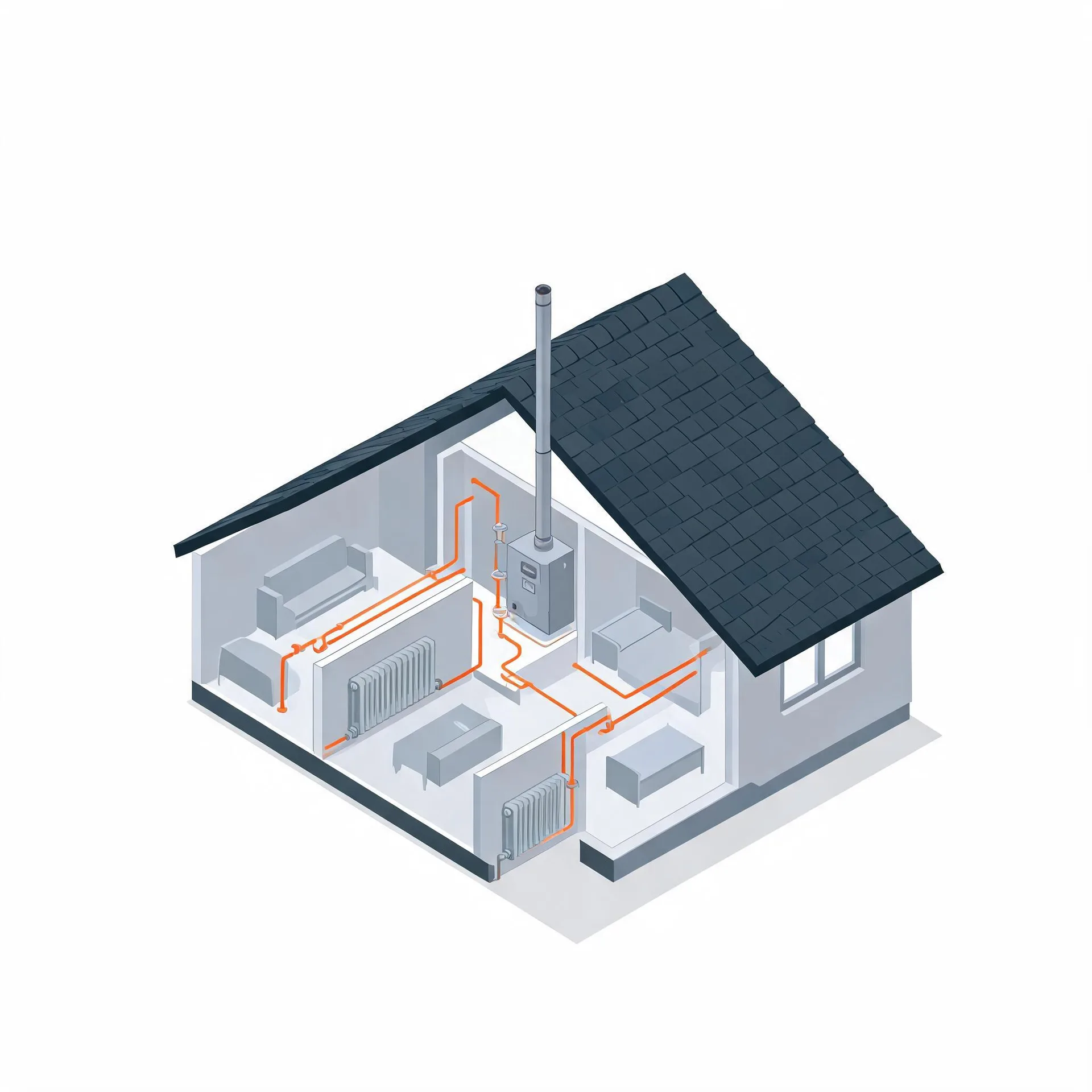
The boiler itself sits in a mechanical room, basement, or utility closet and is the unit a contractor sets in place first. Attached to it are the burner assembly and the heat exchanger, both housed inside the same cabinet. The expansion tank mounts nearby, giving the water in the system room to move as pressure changes.
From the boiler, supply and return pipes run through the house to the heat emitters, which are the radiators, baseboard units, or radiant floor loops a homeowner sees or walks on. A circulator pump, mounted on the piping close to the boiler, moves water through that loop. The thermostat goes on a wall in the living space and tells the boiler when to fire.
The drawing shows a representative layout, and a licensed contractor determines exactly which components and configurations apply to your house.
Find a contractor in Wayne CountyWayne County, Indiana, by the numbers
94 severe weather events were recorded in Wayne County, Indiana between 2015 and 2024.
NOAA National Centers for Environmental Information, Storm Events Database, bulk CSV export, events 2015-01-01 through 2024-12-31.Half the homes in Wayne County, Indiana were built in 1960 or earlier (2020-2024 ACS 5-year).
U.S. Census Bureau, 2020-2024 American Community Survey 5-Year EstimatesWayne County, Indiana holds 30,736 housing units (2020-2024 ACS 5-year).
U.S. Census Bureau, 2020-2024 American Community Survey 5-Year EstimatesOwners occupy 69.2% of the occupied homes in Wayne County, Indiana (2020-2024 ACS 5-year).
U.S. Census Bureau, 2020-2024 American Community Survey 5-Year EstimatesSevere Weather Events in Wayne County
Wayne County's climate puts real demands on heating equipment over time. A boiler sized and installed for local conditions holds up better than one spec'd for somewhere else.
94 severe weather events, 2015–2024. Source: NOAA National Centers for Environmental Information, Storm Events Database.